

Boys, Boys!
Have you ever been in a gym and noticed a couple of men puffing out their chests towards each other, figuratively and literally? For example, they might be at the free weights and one will ask the other to give him some space as he performs curls. The other guy acts offended and crowds the curling dude. They have some words, almost bump chests (for reals), and a gym employee -usually a big man with big arms- appears and requests both men to leave. After examining the “bouncers” arms, each man-boy leaves in a huff.
Maybe outside the gym, the two will have more words or even get into fisticuffs. They act as if one broke the other’s toy truck, or something, like when they were on the playground as children. Each demonstrates the emotional maturity of an eight year old. Their anger and aggressive posturing is as if their very existence is in jeopardy, rather than as the absurd situation that they find themselves.
Perhaps you’ve witnessed it on the golf course. A very rich man, perhaps the leader of a country, plays in a golf tournament he named after himself. He has his caddy drop a ball on the green close to the hole when the ball’s lie was actually on the edge of the green. Or the caddy drops a ball in the fairway when the man’s slice places the ball in the rough. The man doesn’t take any stroke penalties. This action may be repeated whenever the man falls behind in the round. He cheats. On TV. And, then claims victory in winning his own tournament.

These are examples of male egos, or what Lauren might even call fragile egos. Why do so many men act this way, like What the Fuck?!
Not All Men
Let me be clear: not all men have the emotional maturity of an eight-year-old. But enough of them do. But even for the men in our lives that “have it together,” it would behoove us to understand what they may have overcome to be an “adult.”
When Lauren thinks of all the Andrew Tates out there, and the Rape Academy, it’s easy to lose faith in men, even to generalize those attitudes to all men. But, while she knows that not all men are like Andrew Tate and Roosh V, nor subscribe to rape academies, Lauren believes that too many are. And the rest are not doing enough to hold their brothers accountable.
So, how does Lauren not become a cynical bitch and write off all men as unworthy? She performs research and comes up with ideas that help her retain her power as a woman and not let the promoters of rape culture get her down. And, she practices her martial arts every week!
Precarious Manhood Theory
I have a man in my life. What? Lauren, just one? Well, for now, yes, just one. “Jack” is currently the only man in my life. He is not at all like Joe Rogan or Jordan Peterson. But, he is a man. And he cannot escape some “man” things our society pressures onto him. Men’s reactions to some of those things are explained by Precarious Manhood Theory.
The Theory is attributable to Joseph Vandello and Jennifer Bosson, psychologists at the University of South Florida. Per their article from 2008 in the Journal of Personality and Social Psychology, they, along with other co-authors, reported on studies that showed:
“…manhood, in contrast to womanhood, is seen as a precarious state requiring continual social proof and validation.”
And, as Dr. Laurence T. White informs us in his Psychology Today article “Where is ‘Manhood’ Most Precarious?” dated 23 May, 2024, Precarious Manhood Theory applies to cultures around the globe to varying degrees, being most prevalent in highly patriarchal societies, such as the United States.
Each of those guys in the gym – realistically or not – felt the other attacking and threatening his manhood. The threat required a response. Without the emotional maturity to accurately assess the degree of threat, aggression ends up being the default.
And, how about my work environment? Being ignored in meetings. Disregarded for my suggestions, or worse: a man taking credit for my ideas. I had to endure mansplaining about how to make the printer work, how to integrate React components in our code, or how to properly write up a user story. A male peer or supervisor would either become bristly when a I pointed out another way to approach a problem, or I would just get The Shrug – a dismissal that my input had no value. And, if I tried to hold the male co-worker accountable for missing deadlines, it was a dirty look and no apology.

What’s worse than pointing out a big bug in the software code? Men don’t seem to like a woman pointing out they didn’t create perfect software. And the misogynistic behavior they didn’t think I noticed: jokes, exclusion from certain events, talking over me. Sometimes, I was the first person in a RIF, I feel, because I repeatedly pointed out that customers don’t like the way the user screens look. The team manager felt I was questioning his decisions. Or, maybe it was because I said he looks like a red-bellied toad. Anyway, all the above are examples of precarious manhood theory in practice.
Many of men’s (and some women’s) behaviors are due to the belief that manhood is precarious. Well, Lauren, “Not all Men!” True, not all men are concerned about what other men think concerning what counts as manliness. But, enough of them are, and it shows.
Normative Male Alexithymia
I become very frustrated by people with Normative Male Alexithymia (NMA). If something happens that Jack finds upsetting, like when we are in a fight because he thinks I’ve spent too much at the hair and nail salon, he can just shut down. Radio silence. Total stoicism. He won’t say anything and will just walk away.
Drives. Me. Crazy.
I want to know what is going on in his head. What is he thinking before he walks away? I can’t win the argument if the other arguee is not there anymore.
“Alexithymia” literally means “without words for emotions.” It is a trait in which a person has great difficulty describing their emotions, let alone comprehending or processing those sentiments. Someone with Alexithymia can’t attach words to their feelings. They also become confused trying to understand someone else’s emotions.
An article by Dr. Dennis London, “What’s Normal About Male Normative Alexithymia”, published on ThePsychologyGroup.com, states that alexithymia occurs in men at almost twice the rate of women. Dr. London calls NMA as not normal and attributes it to the socialization of men to repress their emotions, as indicated by such phrases as:
“Big boys don’t cry”
“Man up”
“Rub some dirt on it”
Phrases such as these are often used by parents to discourage their young sons from being vulnerable, soft, feminine. The message: it’s important to be “tough;”, it’s important to be “manly.” Unfortunately, this “toughness” makes many men unable to access their emotions. The resulting poor emotional control leaves men with emotional fragility, misogynistic behavior, and sometimes an affinity towards rape culture. It also places the emotional weight of the family on the other adult in the house, usually a woman (at least in straight relationships; I am not addressing same-sex relationships, although these theories are not exclusive to heterosexual people).
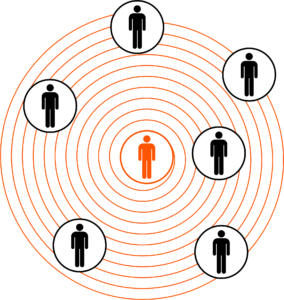
Dr. Kate Balestrieri, in her article posted in PsychologyToday.com on 9 December 2021, “Why Men May Struggle to Communicate Their Feelings, Understanding male alexithymia, and how to get past it.” writes that the rules of toxic masculinity are learned early by many men due to the socialization that “real” men must repress their emotions.
“…so as not to risk being excluded from the club of men.”
Sound familiar? Lauren wonders if the “Club of Men” is just another phrase for “Patriarchy?”
Dr. Balestrieri lists several common indicators of alexithymia, including:
- Difficulty regulating emotions in general
- Utilizes distancing or cutoff strategies (one of Jack’s favorites)
- Fear of emotional intimacy
- Difficulty articulating their feelings to themselves or others
- A lack of internal imagination
NMA is found to have a negative effect on relationship satisfaction and communication, per the article “The Development and Evaluation of a Brief Form of the Normative Male Alexithymia Scale (NMAS-BF)” by Ronald F Levant and Mike C Parent, published in the Journal of Counseling Psychology’s 4 Oct, 2018 edition. In addition, stress due to NMA can cause a fear of intimacy in heterosexual relationships, plus substance abuse issues, violent behavior, and other stress-related illnesses.
Experiential Avoidance
Lauren has a theory. Surprise! Or, is it a hypothesis? She always has trouble distinguishing between the two. Anyway, Lauren thinks NMA is also related to the inability, or more likely the refusal, to look inside oneself in order to identify one’s motivations, fears, feelings, and desires. Basically, not trying to understand what makes oneself “tick.”
Experiential Avoidance is what it sounds like: a person avoiding their experience, or more specifically, those experiences that produce what most would consider negative feelings: anxiety, anger, humiliation, etc.

For example, losing a job is a traumatic experience and a big hit to one’s self-esteem. For many men, it’s also a hit to their identity. Consequently, as frustrating as it may be for a partner, men will avoid – at least initially – anything that reminds them of the job they lost. Golfing, tinkering with a car, incessant watching of sports, or a myriad of activities that will help them keep their mind off the fact that they have nowhere to go at 9:00 AM.
I am sure it hurts when he lost his job. Sitting down and figuring out next steps reminds him too much of what he lost. Thinking about it, considering his strengths and weaknesses, and querying previous clients about opportunities for potential employment produces a lot of emotional discomfort. His defenses are telling him to avoid it at all costs rather than confront difficult emotions such as anger, fear, and guilt.
When it comes to her man not acknowledging his emotions and just dealing with the situation at hand, Lauren asks, “What the Fuck? Why the avoidance?” Well, I have an article for that! “Understanding Emotional Avoidance in Men” by Michela Parisi, posted in MensMentalWellnessCenter.com on 16 Oct 2024. Michela explains the causes of emotional avoidance in men include:
- Societal Expectations: from an early age, men are pressured by society to suppress their emotional reactions and be “tough”.
- Fear of Judgment: Really a fear of rejection by showing any vulnerability. Their friends are hyenas ready to pounce on those they perceive as weak.
- Lack of Emotional Awareness: As with Alexithymia, the inability to label an emotion precludes the ability to acknowledge and confront the emotion in a healthy manner
- Avoidance of Pain: Who doesn’t want to avoid pain, emotional or otherwise? However, not facing the pain prevents healing.
And, one from Lauren:
- The “Patriarchy” doesn’t like it. Self-aware men question the Patriarchy too much, according to the Patriarchy. Being tuned into one’s feelings and having concern for others’ feelings are threats to a male-centered culture (i.e., a culture that places women into a lower, ignored, and less important class) and the power that some men gain from that privilege.
What Are the Impacts?
Experiential Avoidance can be considered a self-protection mechanism to evade harm. However, in their article “Experiential Avoidance Process Model: A Review of the Mechanism for the Generation and Maintenance of Avoidance Behavior” by Yi Wang, Jing Tian, and Qingxuan Yang published in Psychiatry Clinical Psychopharmacology, 2024 Jun 1, the authors explain that…
“Experiential avoidance is essentially an individual’s escape strategy in response to emotion regulation triggered by external events.”
The authors spell out that experiential avoidance is a coping mechanism that can contribute to stress-related mental disorders such as anxiety, depression, and PTSD. It is a way that people suppress their emotions, and sometimes it will lead to emotional overreactions and the inability to cope with emotional pain. Avoiding uncomfortable situations or painful memories will show up in other mental distress and inappropriate outbursts. Like Jack exploding at me for eating his chocolate bar. To be fair, it was chocolate.

These “side effects” of experiential avoidance, and the other theories for men’s emotional immaturity, are the impact on the avoider’s relationships. Who likes to be yelled at for eating chocolate!
Family Systems Theory
Okay, all these “theories” may explain away the ego fragility misnomer, but he still is frustrating me, and I feel he needs to get over it for the family’s sake – and my sanity.
Well, Jack isn’t being this way because he woke up one day and said, “I’m going to be a fragile asshole today.” It took years of conditioning from his family of origin, his peer group, and society at large. Hell, I even contributed to it –inadvertently–, but I’ll own that.
Jack did not grow up in a vacuum, nor does he live in one now. There is another theory – yes, Psychology seems overflowing with theories – but we are dealing with humans, and we are a weird lot with a long list of issues.
The Bowen Family Systems Theory got its start in the 1950s by American Psychiatrist, Dr. Murray Bowen. He said that each individual is part of a family and the dynamic between the two affects each.
There is emotional fusion as well as emotional differentiation, and that each individual in the family has to navigate those dynamics. In other words: each person affects the family, and the family affects each person.
Psychology Today’s website, PsychologyToday.com, posted an article on 13 November 2023 written by Ilene Strauss Cohen, PhD. “Understanding Bowen Family Systems Theory, Enhancing your relationships through emotional differentiation.”
In the article, she explains how the dynamics of family influence our concept of self and our relationships. For example, when a child is upset, the parent becomes anxious. When a partner is insecure in their ability to contribute to the family (if they are aware of it or not), the other partner may feel it her duty to provide emotional support.
According to Katherine M. Helm, in her article “Family systems theory” published in 2024 on EBSCO.com, these family dynamics can go back generations. Referred to as the “multigenerational transmission process.” Boundaries and power structures are passed down from generation to generation.
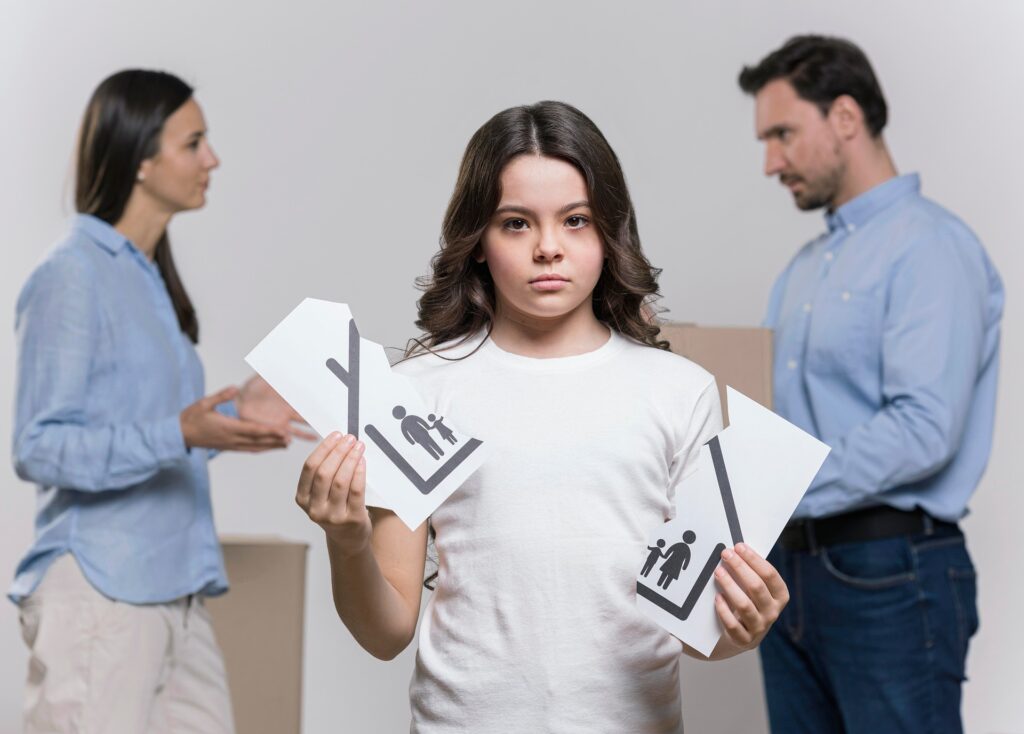
Anxiety and the ability to manage it are critical for healthy family dynamics and for the individual. Much of what we see as male ego fragility is actually just anxiety. That anxiety shows up as an excessive need to be reassured, as aggression, or as emotional silence. Thanks, NMA and Experiential Avoidance.
Lauren, what does all this mean? How do I get my man to talk with me about what he is going through instead of reacting with anger or worse?
I don’t know what it all means, but it seems to me that what we tend to see as a fragile ego is a set of symptoms brought on by many sources, and the man sees these as threats to his manhood. They tend to overrespond, or not respond at all, as a result.
Also, the “Patriarchy” seems to be alive and well today, and it seems to dictate that one of a woman’s duties is to help her man make it through a time that threatens his manhood. Consequently, women can take on the burden of emotionally supporting their man or trying, sometimes unsuccessfully, to help them gain some emotional maturity. We then retain resentment and are exhausted by our effort.
How do Women React to Men’s Lack of Emotional Maturity
Self-Talk
Ok, so I am going to challenge you. Not to a fight or to a duel, but for some self-examination. What do you tell yourself about you and your relationship when you are the sole emotional support structure for the family?
- I have to support him (be the perfect wife) or he will leave me.
- I have to support him (be the perfect wife) or my parents will criticize me because it will be my fault.
- I have to support him (be the perfect wife) or my friends will judge me.
- He was raised without learning emotional maturity. I need to help him.
- If I don’t do it, nobody will.
- I can’t have my relationship fall apart. I have to make sure he feels supported.
- I’m afraid he’ll get mad if I try to “coach” him. I get mad when he doesn’t respond to my “coaching.”
- Blah, blah, blah.
You might have a thousand excuses, but that self-talk doesn’t make you feel better. And, more importantly, it doesn’t solve the problem!
Emotional Burnout
Good News: I am not alone. Bad News: I am not alone. This carrying of emotional weight seems to be an epidemic. Like, what the fuck? Are men’s egos really that fragile, or is it something else?
The experts say that this burden of carrying the emotional weight of the family leads to our own emotional, if not physical, exhaustion. Emily Foster points out some of the symptoms of Emotional Exhaustion in her article “Emotional Exhaustion in Women – What It Is and How to Begin Healing” published on WomensWellnessPsychotherapy.com (undated).
“Compassion Fatigue in Women: Emotional Burnout” is another article on MelanatedWomensHealth.com (undated, no author cited), that defines “compassion fatigue” as the emotional and physical exhaustion that comes from caring for others, especially when one is the emotional support system for the family.
It is not wrong to support the family, or your partner. But, if you are always irritable, anxious, or have a sense of hopelessness, you may have Compassion Fatigue.

I ask you to self-evaluate to see if your compassion tank is drained, or better yet, seek the advice of a mental health professional, because lord knows Lauren is anything but professional. And, she is a bit mental herself. The alternative is a major crash and burn that can take many forms I do not want you to experience. Emotional exhaustion can produce:
- Lack of Motivation
- Depression
- Irritability and anxiety
- Trouble sleeping
- A sense of hopelessness
In the most extreme, you might be looking at a mental breakdown with a vacation in the psych ward!
If the issue isn’t addressed, tout de suite, relationships may break down. A person will end up breaking up with the man, and repeat the cycle with the next guy.
Quit
One thing some women do when dealing with supporting a man’s lack of emotional maturity is to just give up. Lauren! I’m not going to just give up. I have a life to live.
Exactly! To be clear, more women are giving up on having relationships with men. Per an article by Alice Lassman in the HuffPost, dated 12 June 2025, “I’m A Gender Researcher & This Is The Real Reason Women Are Stepping Away From Dating & Relationships” women are “quiet-quitting” relationships with men and are 23% less likely to want to date men. The reason: it is a lot of work to close the emotional intelligence gap between the genders, and the man expects the woman to fill that gap! Like, WTF?!
Dr.s Angela Derrick and Susan McClanahan, in their article “Emotional Labor & Gender Roles: Women Bear the Mental Load, and We Are Exhausted.” Posted on 4 November 2024 on SpringSourceCenter.com, state that…
“Gender roles under patriarchy create an atmosphere where the responsibility of emotional labor will commonly fall squarely on the shoulders of women. Is it any wonder women are overworked and exhausted?!”
What Can We Do to Make It Better?
So, you’ve decided that you want to keep your relationship with your man, or you still want to date men. Now what, knowing that a lot of men will be emotionally immature? Not all, but a lot.
I think there are three components to making our emotional exhaustion, and the conditions that cause it, better:
- Having the man self-manage his “fragile ego,” become more self-aware, and emotionally mature
- Deploy tactics for dealing with our own emotional burnout
- And, self-care to prevent compassion fatigue in the first place.

Yes, it is unfair, and it sucks that I have to work at this aspect of my life. But what alternative do I have: being alone? A crash and burn in my relationship?
How to Smash the Patriarchy
Lauren is frustrated. Frustrated that she has to take on the burden of “training” Jack to be more emotionally mature. Of course, he will resist if he knows she is trying to help him in this way.
So, what’s one way to help Jack heal himself?
Precarious Manhood Theory, posits that “manhood” is a social construct. And as such, men are aware and concerned about what others think of them. Manhood can easily be lost, unlike womanhood. This is especially true in more patriarchal societies. So, the first thing we can do is resist and try to break down the Patriarchy. Besides promoting inequality amongst the genders, it also has negative effects on the mental health of the men we love. It establishes terrible ideas such as men can lose their manhood and the Patriarchy loves for men to behave in bizarre and even frightening ways in order to keep their perceived manhood.
Support for the Patriarchy is evidenced by laws against bodily autonomy, the glass ceiling (yes, too often it is still there), rape culture, and having no real ramifications for domestic violence.
Men and women should all be against the Patriarchy and work towards dismantling it. The Patriarchy enslaves men to an expected type of behavior and relegates women to a lower caste while expecting them to pick up the emotional burden of the relationship.

The undated article by Marion Nekesa on GirlPowerTalk.com, titled “How to Deal With Sexism and Smash the Patriarchy at Home” provides four concrete actions to help breakdown the Patriarchy
- Inform and Educate, mostly about misogynistic behaviors that people may not be aware are misogynistic. An example is that women are expected to be primary caregivers, even if they have their own career.
- Encourage Equal Sharing of Responsibility and Property. Cooking, cleaning, childcare, and emotional support of the family should be distributed equally between partners. A chore schedule could help here.
- Call out Instances of Sexism. This should apply to all family members and friends. Work might be a bit more uncomfortable, but it’s a worthy goal to call out sexism wherever we find it. An example of an area where we should call out sexism is sports: either watching or participating. Men’s sports are the default for most sports, and women’s are a second thought. They should have equal time on TV, and we should support our local women’s teams just as fervently as men’s. Just an FYI, Lauren much prefers to watch women’s fútbol than men’s. Why doesn’t the World Cup have equal time for women’s games. WTF?! FIFA!
- Learn to say “No.” There’s that word again. No to sexist traditions, no to traditions of men not being responsible for their own emotional maturity, no to societal expectations of men not expressing their feelings, and no to gender stereotypes!
How to Heal from Emotional Exhaustion
Ok, so I’m emotionally exhausted. How do I recover? Emily Foster gives us some ideas for healing from emotional exhaustion in her article “Emotional Exhaustion in Women – What It Is and How to Begin Healing:”
She outlines the steps for healing as:
- Name it: Using words to identify your feeling is powerful. Acknowledge you are emotionally exhausted. If Lauren can pipe in, an adjunct to Naming and acknowledging it, is to OWN IT!
But Lauren, it is his fault I feel this way!
You may believe that to be true, but if you take ownership of your emotional exhaustion and your mental health, you now have the POWER to decide what to do about it. So, take back the power and own it, baby! - Set Boundaries: Practice saying “No.” C’mon now. Lauren wants you to say “No” out loud. Right now, say it. Don’t worry about anyone hearing you. Just say “No!” See? Don’t you feel better already? Now that you know you can say “No,” start saying “no” to things that drain your energy.
- Prioritize Rest: Rest is self-care. Rest reenergizes. Put rest time in your calendar. You are not being “lazy”. Do not feel guilty resting. You need it, so unapologetically create space for rest!
- Talk to Someone: Lauren talks with her therapist on a regular basis. Lauren also talks with her sister. Talk with yours or your mom (unless they are the ones causing your stress). Your man driving you nuts – commiserate with your friends. Maybe at girls’ night out, over a glass of wine or two. It’s not gossip. It’s therapy!
- Reclaim Joy: This is easier said than done. But Lauren is going to start small and slow. For example, Lauren likes chocolate – little bits of sweet happiness in a crazy world. And, baths. Lauren likes to throw in a bath bomb and give herself a good soak in an aromatic steamy tub of hot water. Once she can provide joy to herself by herself, she can introduce joy to her partner – and they can experience joy together as a couple, maybe.

Preventing Emotional Exhaustion
Lauren, these are great ideas for dealing with my current exhaustion, but how do I prevent it from happening in the first place. The experts have some ideas there, too!
This article in Melanated Womens Health has some suggestions for preventing compassion fatigue in the first place.
- I love this one: Build daily rituals of self-compassion. Yea, forget his problem. Take care of yourself first! Ask yourself what you need today. Make it not about other’s need, but what you need.
Think of the airline instructions about oxygen masks before each flight. Put yours on first, then help others. Your daily ritual for yourself is your oxygen mask for the day. You can’t help others if you don’t have your own oxygen. - As mentioned before, say “No” with conviction and without guilt. Boundaries are self-respect. You deserve respect, girl. Saying “no” when appropriate makes your “Yes” more powerful and meaningful – especially if you fulfill your promise as desired.
- Take breaks. We all need a breather. Especially when in an emotionally heavy space. Have a piece of chocolate.
- Give yourself permission to make room for your own emotions. Again, think oxygen mask. You need to sit with your own emotions, too. If you don’t create time to spend with your emotions, they’ll feel abandoned and start hanging with the wrong crowd. Who knows what they’ll do then. Maybe they’ll start vandalizing the ‘hood, and end up in jail or something. So, give them some love. Feel me?
- And, as pointed out before – rest. But Melanated Womens Health is more emphatic. Rest not as a reward, but as a right. You have to recharge your batteries.
Healthline.com has a few additional ideas in the article “What is Emotional Exhaustion?” by Jacquelyn Cafasso updated 11 July 2025. Jacquelyn suggest actions such as:
- Eating right
- Getting some exercise
- Practicing mindfulness
Lauren’s Opinion on Men’s Egos

If you hadn’t noticed, Lauren has a few opinions of her own.
Look, I don’t think we are going to resolve men’s fragile egos, at least in my lifetime. Clearly, many women are tired of even trying, as explained in Alice Lassman’s Huffpost article. But I think it is a reality we have to deal with. So, I think it comes down to a few things:
- Fight and resist the Patriarchy! Stop electing men to positions of power. Push for equality. We need more women, who themselves are not supporters of the Patriarchy in politics.
- Point out sexism and misogyny. Constantly. To everyone. Even to men we view as emotionally mature. Those men should appreciate it because maybe they were unaware of how something was unfair to women.
- Ask the not-all-mens why they are not calling out the other men for their bad behavior.
- Take care of ourselves. Rest, self-care, camaraderie so we are energized for the day.
- And, yes, sometimes, help your man understand how therapy and self-examination can help them, and how you need some support for the other 4 bullets!
In the end, it is about your own power. You can’t help others if you don’t have your own power. And that means you can’t be everything to everyone. Have the power to make them take responsibility for their own well-being. Stop being their crutch (er, door mat).
What Are Your Thoughts?
How have you dealt with the fragile ego of the man (men) in your life? Have you confronted them? Do our ideas for dealing with it help? Drop us a note and let us know. Go to the Contact page and fill out the form. You can also let us know what you think of this post or provide ideas for future posts. Or, just say “Hi!”
Coming Up
Lauren has moved! Yes, she has left the greyness of Seattle for the Sunshine of Lisbon. The next episode is a series of video clips of Lauren’s Life as she moves to Portugal. And of course she has some commentary. Lauren, you left the U.S.? Like What the Fuck?!
Thank You! Send Us a Note
Thanks for spending the time to read this post. If you have feedback, article ideas, other suggestions, or just want to send us good karma, go to the Contact page and send Lauren a message. If you are gonna troll, though, just fuck off.
Peace, love, and emotional well-being to everyone! ✌️ ❤️
Lauren
….
Links Used in this Post
Precarious Manhood Theory
https://www.psychologytoday.com/us/blog/culture-conscious/202105/where-is-manhood-most-precarious
https://www.sciencedirect.com/science/article/abs/pii/S1740144516301620
https://www.academia.edu/34488716/Precarious_manhood
Gender Role Socialization
https://www.huffpost.com/entry/mankeeping-dating-emotional-labor-research_l_682f3305e4b0ef574bf5e553
https://springsourcecenter.com/emotional-labor-gender-roles-women-bear-the-mental-load
Normative Male Alexithymia
https://pmc.ncbi.nlm.nih.gov/articles/PMC10388695
https://thepsychologygroup.com/male-normative-alexithymia/
https://menscounsellingservice.com/resources/why-some-men-struggle-samantha-doyle
Experiential Avoidance
https://pmc.ncbi.nlm.nih.gov/articles/PMC11332439
https://pmc.ncbi.nlm.nih.gov/articles/PMC6131476
https://drmoffitt.substack.com/p/avoidance-why-men-do-it-and-what
https://www.mensmentalwellnesscenter.com/post/understanding-emotional-avoidance-in-men
https://en.wikipedia.org/wiki/Experiential_avoidance
Family System Theory
https://www.ebsco.com/research-starters/health-and-medicine/family-systems-theory
Emotional Exhaustion
https://unyoked.co/wellness/what-is-emotional-exhaustion
https://www.healthline.com/health/emotional-exhaustion
https://centerstone.org/our-resources/health-wellness/how-to-cope-with-emotional-exhaustion/
https://thewaveclearwater.com/understanding-the-signs-of-burnout-in-women-and-how-to-recover
https://mindfulsoulwellbeing.com/burnout-vs-depression-in-women-how-to-tell-the-difference/
https://melanatedwomenshealth.com/compassion-fatigue-in-women-emotional-burnout/
https://girlpowertalk.com/deal-with-sexism-and-smash-the-patriarchy/
Leave a Reply